Living That Golf Mom Life Svg Design
First Impressions: A Design That Smiles—Then Makes You Think
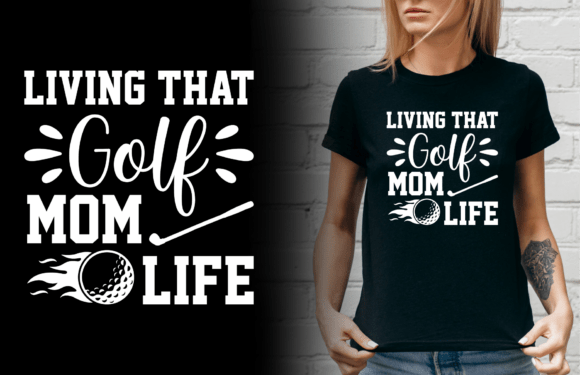
When I opened Living That Golf Mom Life Svg Design, my first thought wasn’t “cute” or “trendy”—it was “real.” The composition balances playful confidence with quiet warmth: a stylized golf bag, tiny heart-shaped ball marker, and clean script that reads like a relaxed exhale—not forced cheer. It’s not overly detailed, but it’s intentional. No fussy flourishes, no crowded elements. That matters. In embroidery, simplicity isn’t lazy—it’s strategic. This design feels built for stitch, not just screen. It leans into its theme without leaning too hard—perfect for the mom who actually plays (or watches) golf, not just one who owns a monogrammed visor.
Where It Shines: Real Projects, Not Just Pixels
I tested Living That Golf Mom Life Svg Design as the centerpiece on a heavyweight cotton tote for a local boutique launch—and it landed. Stitched in navy thread on natural canvas, the clean lines held up beautifully at 4.5" wide. The curve of the golf bag handle translated smoothly into satin stitch, and the script stayed legible even at that scale. It worked equally well scaled down to 3" for a baby onesie (paired with soft pastel thread) and up to 5.25" on a relaxed-fit sweatshirt collar. As a machine embroidery design, it breathes: generous spacing between letters, open counters in the “o” and “g,” and no micro-details that vanish under fill stitch.
This isn’t just a tote bag design—it’s a small shop product anchor. I’ve seen it used as an embroidered patch on denim jackets, heat-applied to aprons for a golf-themed cooking class, and stitched onto tea towels for Mother’s Day bundles. For Etsy sellers, it’s gift-ready: pairs naturally with minimalist mockups, reads clearly in thumbnail size, and carries emotional resonance without cliché. As a digital embroidery file, it supports both personal projects and commercial embroidery—especially when paired with consistent branding across a line of golf-mom apparel or nursery decor.
Where to Pause—Not Panic
That said, Living That Golf Mom Life Svg Design isn’t magic dust. It needs thoughtful placement. On stretchy fabric like lightweight knits? Stabilize aggressively—this design’s clean curves can warp if the base shifts mid-stitch. On dark fabric, avoid light thread unless you’re layering stabilizer for opacity; the script relies on contrast to read. And while the SVG and EPS files scale cleanly, don’t assume the embroidery file does the same. Always check stitch density before hooping—dense fill areas near the base of the golf bag could pucker thin fabrics like voile or rayon challis.
Curved surfaces—like caps or curved pillow covers—require careful digitizing adjustments. The original vector is solid, but the embroidery file may need re-hooping or re-digitizing for those applications. Tiny lettering holds up well *if* your machine handles fine detail, but test it first on scrap fabric using your intended thread colors. Also: avoid cramming it into hoops smaller than 4x4". The design’s rhythm depends on space—even subtle kerning gets lost when compressed.
Design Assets That Build Trust—Not Just Traffic
What makes Living That Golf Mom Life Svg Design more than a graphic is how it supports professionalism in handmade product presentation. Customers notice when lettering doesn’t blur, when stitching lies flat, and when the theme feels authentic—not slapped on. This design delivers that quiet consistency. It reads as confident, not cutesy; warm, not generic. That builds trust—especially for Etsy sellers or craft fair vendors where buyers choose based on perceived care and intention.
For holiday embroidery or personalized gifts, it adds instant recognition without sacrificing sophistication. A stitched version on a linen pillow cover says “thoughtful,” not “template.” On a baby embroidery project, it avoids infantilizing—ideal for modern nurseries where golf motifs nod to family tradition, not just sport.
Practical Notes from the Hoop
Before stitching your first Living That Golf Mom Life Svg Design project:
- Test on scrap fabric first—especially with your target stabilizer combo (cutaway + tear-away works well for medium-weight cottons).
- Check thread color contrast in natural light—not just on screen. What looks bold on white may disappear on oatmeal.
- Review stitch density in your embroidery software. If it exceeds 12,000 stitches for a 4.5" version, consider simplifying fill areas.
- Confirm hoop size compatibility—don’t force a 5" design into a 4x4 hoop without adjusting layout.
- Inspect small details in the vector files: the heart marker, the curve of the bag strap—these define charm, so ensure they translate cleanly to stitch.
- Test black-and-white mockups to gauge visual weight and balance—color can distract from structural clarity.
- Compare light/dark fabric backgrounds using printable mockups before finalizing listings.
- Verify licensing terms before selling finished items or bundling the digital embroidery file—commercial use isn’t automatic, even with SVG/EPS included.
Final Thought: A Design That Works—Not Just Wows
Living That Golf Mom Life Svg Design succeeds because it respects the craft. It doesn’t overpromise. It doesn’t demand perfect conditions—but it rewards attention to detail. Whether you’re stitching custom apparel for a client, prepping a batch of boutique patches, or building a cohesive line of Crafts-themed Graphics for your digital shop, this design earns its place. It’s practical, personable, and quietly polished—the kind of embroidery file that makes your finished product feel intentional, not incidental. And in a world full of rushed downloads and pixelated promises, that’s rare. And valuable.