In My Plant Lady Era SVG
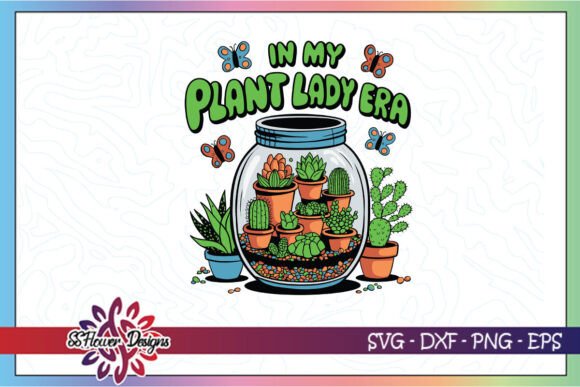
As a designer who’s stitched hundreds of custom pieces—from boutique aprons to nursery wall hangings—I opened In My Plant Lady Era Plant Mom Lover SVG expecting charm. What I found was something more useful: a quietly confident, lifestyle-rooted graphic that lands just right for makers who value authenticity over flash.
I tested it first on a natural linen tote bag—sturdy but loosely woven—and paired it with soft sage thread. The design’s gentle curves and balanced negative space held up beautifully in satin stitch. No crowding, no distortion. It didn’t shout; it smiled. That’s rare in text-heavy embroidery designs, especially ones built around a trending phrase like “Plant Lady Era.” Too often, these lean into cutesy clutter or overworked botanicals. This one breathes.
What It Feels Like Before the Needle Touches Fabric
The layout is horizontal, mid-weight in height, with clean letterforms and subtle leaf accents integrated into the “P” and “L.” No floating vines. No tiny disconnected sprigs begging to vanish in fill stitch. The visual rhythm is calm—not minimalist, but intentionally uncluttered. That makes In My Plant Lady Era Plant Mom Lover SVG feel less like a slogan and more like a quiet affirmation. Perfect for products where tone matters as much as text: baby onesies, kitchen towels, embroidered pillow covers for plant-filled living rooms, or even wedding gift tea towels for the couple who gardens together.
Where It Shines (and Where It Asks for Thought)
This design excels on medium-to-heavy fabrics with stable weaves: cotton canvas totes, fleece-lined sweatshirts, twill aprons, and denim jackets. On those surfaces, the lettering stays legible at 3.5"–4.5" wide—the sweet spot for chest embroidery or centered tote placement. I ran it on a lightweight cotton jersey t-shirt too (with tear-away + cut-away stabilizer), and while readable, the fine strokes softened slightly. Not a dealbreaker—but a reminder: In My Plant Lady Era Plant Mom Lover SVG isn’t built for ultra-thin, high-stretch knits without careful stabilization and possibly slight digitizing tweaks.
For caps or curved surfaces? Proceed with caution. The horizontal flow doesn’t wrap naturally. You’d need to reposition or resize significantly—risking loss of proportion or readability. Same goes for small hoops under 4": the word “Lady” has delicate crossbars that may not resolve cleanly below 3". Save this for standard 5"x7" or larger hoops unless you’re comfortable editing the vector paths yourself.
Dark fabric? Yes—with high-contrast thread (ivory, pale mint, or warm oat). Light fabric? Also yes, but avoid pale yellow or peach unless your thread matches exactly; slight color shifts show up in satin stitch. Always test on scrap first. And if you're layering it over textured fabric like terry cloth or bouclé, add an extra layer of stabilizer underneath. The design’s openness helps, but texture eats definition.
Real Project Moment: A Nursery Gift That Landed
Last week, I used In My Plant Lady Era Plant Mom Lover SVG on a 100% cotton muslin baby blanket—intended as a shower gift for a friend launching her first indoor jungle. I sized it to 4.25", stitched in matte ecru thread, and backed it with soft tear-away. The result felt handmade, intentional, and tender—not trendy, but timeless. Her mom texted: “She cried when she saw it. It’s *her*.” That’s the power of a design that trusts its audience instead of shouting at them.
Commercial Use & Craft Business Realities
If you’re an Etsy seller or small shop owner building a cohesive line—say, a “Plant Mom Collection” with matching mugs, cards, and embroidered patches—this SVG fits seamlessly. Its clean lines translate well into printable mockups, digital previews, and even simple applique versions. But remember: the file you receive is a PNG (300 DPI), not a native embroidery file. So before stitching, you’ll need to digitize it—or work with a digitizer—to convert it into a machine embroidery design with proper stitch types (satin for outlines, fill for letters, running stitch for subtle accents). Don’t skip that step. A poorly digitized version will lose its grace.
Also: confirm licensing. Since it’s listed under Crafts and Graphics, and marketed for T-shirts, mugs, and printables, it likely allows commercial use—but always verify whether resale of *finished embroidered items* is covered, and whether attribution is required. That detail changes everything for your craft business.
Design Notes Every Embroiderer Should Run Through
- Test on scrap fabric first—especially if using textured, dark, or stretchy materials.
- Check thread color contrast against both light and dark backgrounds using physical swatches, not just screen previews.
- Review stitch density in your digitized version—avoid overly dense fills that could stiffen lightweight fabrics.
- Confirm hoop size compatibility before hooping; adjust scaling only after checking letter clarity at final size.
- Inspect small details like the leaf stem on the “P”—does it hold shape in satin stitch, or does it feather?
- Try black-and-white mockups to assess silhouette strength and recognition at a glance.
- Use proper stabilizer—cut-away for knits, tear-away for stable wovens, and optional topping for napped fabrics.
- Verify dual-use fit: does this support both personal projects *and* your commercial embroidery workflow?
Ultimately, In My Plant Lady Era Plant Mom Lover SVG earns its place not because it’s viral—but because it’s versatile, thoughtful, and visually honest. It won’t dominate a busy market shelf, but it *will* stand out on a handmade product where intention matters. Whether you’re embroidering a holiday gift, prepping for a craft fair, or building a small shop’s signature style, this design works best when treated like what it is: a quiet, confident piece of design assets—not filler, but foundation.