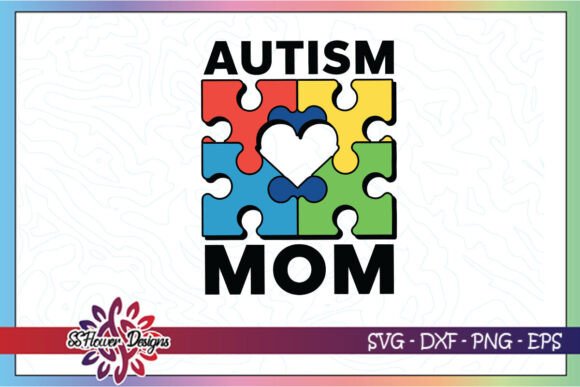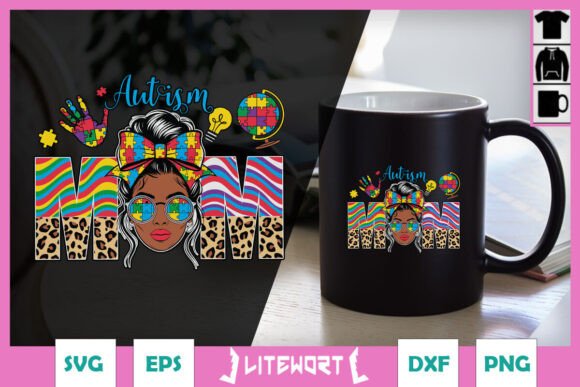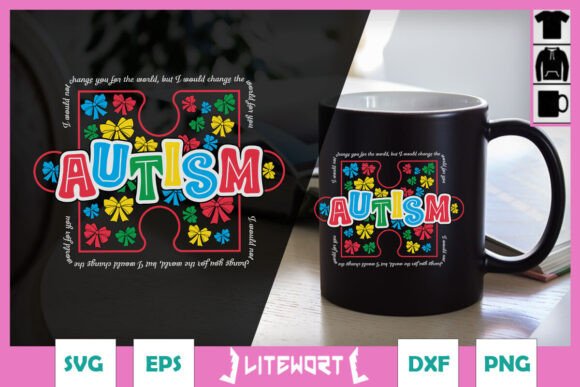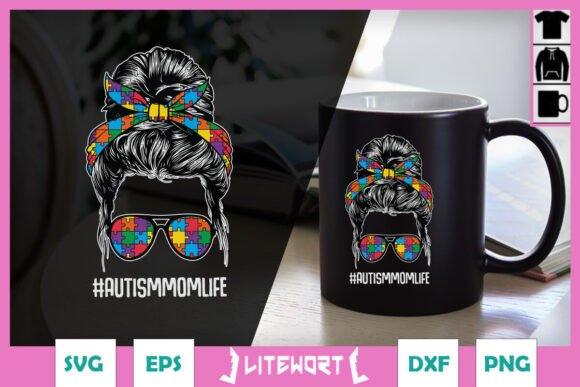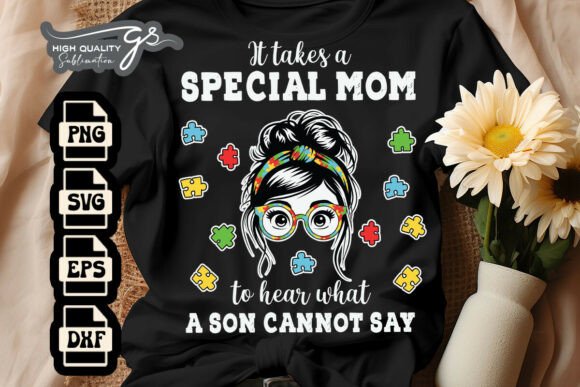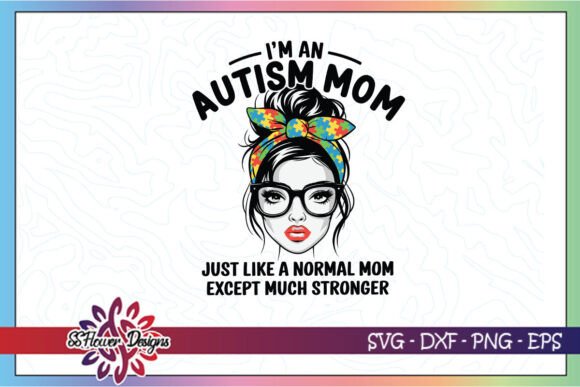
I’m an Autism Mom Awareness SVG
As a designer who’s stitched hundreds of awareness-themed pieces—from boutique baby blankets to Etsy best-selling tote bags—I opened I’m an Autism Mom Awareness SVG expecting warmth, clarity, and quiet strength. What I found was exactly that: a clean, heartfelt design with intentional spacing, balanced weight, and a gentle visual rhythm that feels personal without being overly decorative. It doesn’t shout—it resonates. That matters deeply when you’re embroidering something meant to carry meaning: a mom’s coffee mug, a sibling’s backpack patch, or a nursery wall hanging.
First Impressions: Simplicity With Substance
The layout is centered, modest in scale, and built for legibility—not flourish. The phrase “I’m an Autism Mom” sits as one cohesive line, not broken across multiple tiers. There’s no clipart heart or ribbon tacked on; the emphasis stays on the words themselves. That’s smart. In embroidery, every curve, corner, and serif adds complexity—and risk. This design avoids unnecessary embellishment, which means fewer satin-stitch transitions, smoother fill-stitch coverage, and cleaner edges on lightweight fabrics like cotton poplin or jersey knit.
I tested it as a tote bag design first—6-inch hoop, medium-weight canvas, tear-away stabilizer. The letterforms held up beautifully. No thread nesting in the lowercase “a” or “o,” no skipped stitches in the apostrophe. Even at 3.5 inches wide (a common size for adult apparel), the text remained crisp and readable from three feet away. That’s rare in awareness graphics that lean too thin or too condensed.
Where It Shines—and Where to Pause
I’m an Autism Mom Awareness SVG excels in projects where emotional authenticity meets everyday utility: embroidered sweatshirt cuffs, baby onesie chest patches, linen tea towels for autism-friendly kitchens, or minimalist pillow covers for sensory-friendly spaces. Its even stroke weight translates well into running stitch outlines and dense fill-stitch bodies—no jagged transitions between font weights or awkwardly spaced kerning.
It works especially well for custom apparel on light-to-midweight fabrics: soft cotton tees, fleece-lined hoodies, structured aprons, and unlined canvas caps. On dark fabric? Yes—but only with high-contrast thread (navy on cream, charcoal on oatmeal). Avoid pairing it with metallics or variegated threads unless you’re aiming for intentional texture—the design’s strength lies in its quiet consistency, not flash.
Proceed with care on: stretchy knits (pre-shrink and use cut-away + topping), textured terrycloth (stitch density may need slight reduction), curved cap fronts (hoop size must accommodate full width without distortion), and baby items under 12 months (check stitch density for safety—no loose loops or dense satin zones near seams). Also avoid scaling below 2.75 inches wide: the apostrophe and internal counters shrink into ambiguity.
Real-World Fit: From Craft Fair Booth to Digital Shop
Last month, I used I’m an Autism Mom Awareness SVG to create a limited run of embroidered linen napkins for a local neurodiversity support group’s holiday fundraiser. We paired it with soft sage thread on natural flax—no background fill, just clean white-on-linen stitching. Customers didn’t just buy napkins; they paused, smiled, sometimes touched the embroidery gently. That’s the signal: this isn’t just decoration. It’s recognition. And that changes how people value your handmade product.
For Etsy sellers and small shop owners, this design bridges sentiment and scalability. It’s versatile enough for digital mockups (I rendered it on mockup templates for mugs, totes, and crewnecks—all read clearly), yet distinctive enough to stand out in a crowded “awareness” category. It doesn’t compete with rainbow infinity symbols or puzzle pieces—it offers quiet solidarity instead. That builds trust, especially among parents seeking respectful, non-stereotyped representation.
Practical Designer Notes You Can’t Skip
- Test before you commit: Stitch it on scrap fabric matching your final project’s weight and stretch—even if it’s just a 2x2 swatch. Watch how the “m” and “n” anchors behave on your machine.
- Stabilizer strategy: Use medium-weight cut-away for knits, tear-away for stable wovens, and add a light water-soluble topping for fuzzy or napped surfaces (like fleece).
- Thread contrast is non-negotiable: Print a black-and-white mockup first. If letters blur together on gray paper, they’ll blur on heathered fabric.
- Hoop size check: Measure your widest character cluster (“Autism Mom”) at intended size—then add ¼ inch buffer on each side. Don’t force it into a tight hoop.
- Licensing matters: Since this is delivered as a PNG—not an embroidery file—you’ll need to digitize it yourself or hire a digitizer. Confirm commercial rights before selling finished items or reselling the vector version. The listing says “ideal for T-shirts, iron-ons, mugs…” but doesn’t specify resale terms—verify before listing on Etsy or your own shop.
- Washability test: If using for baby items or kitchen linens, wash a test piece first. High-density fill areas can stiffen or pucker after laundering if stabilizer isn’t fully removed.
Final Thought: Meaning Meets Makeability
I’m an Autism Mom Awareness SVG earns its place in my working library because it balances two hard-to-find qualities: emotional resonance and embroidery practicality. It doesn’t ask for special treatment—no oversized hoops, no exotic stabilizers, no thread substitutions. It asks only that you honor its simplicity. Whether you’re stitching a single personalized gift or producing 50 embroidered patches for a support group event, it delivers quietly, cleanly, and respectfully.
That’s the mark of strong design assets for crafters and creative entrepreneurs: not flash, but fidelity—to the craft, to the message, and to the people who’ll hold the finished product in their hands.